Skip to content

AI + tools + research

I build the thing
I wish existed.

A book about AI personas. Tools for marketing teams. Independent research into how models respond. I use Claude and ChatGPT to help turn curiosity into things people can read, explore, and use.

Built with AI. Guided by human judgment. I define the problem, shape the content, and review the result. These projects use AI in development; they do not all run an AI model.

Featured project · Book + persona builder

The Audience Machine

A book. A framework.
A tool you can use.

I wrote The Audience Machine to explore how AI personas can help marketers think more carefully about the people they’re trying to reach.

Now I’ve built a companion persona-building tool based on the book—taking the idea beyond the page and into something people can try.

The focus
Audience-first content strategy
My role
Author + AI-assisted builder

Personas are a starting point for questions and ideas, not a substitute for research with real people.

The persona builder currently requires ChatGPT sign-in.
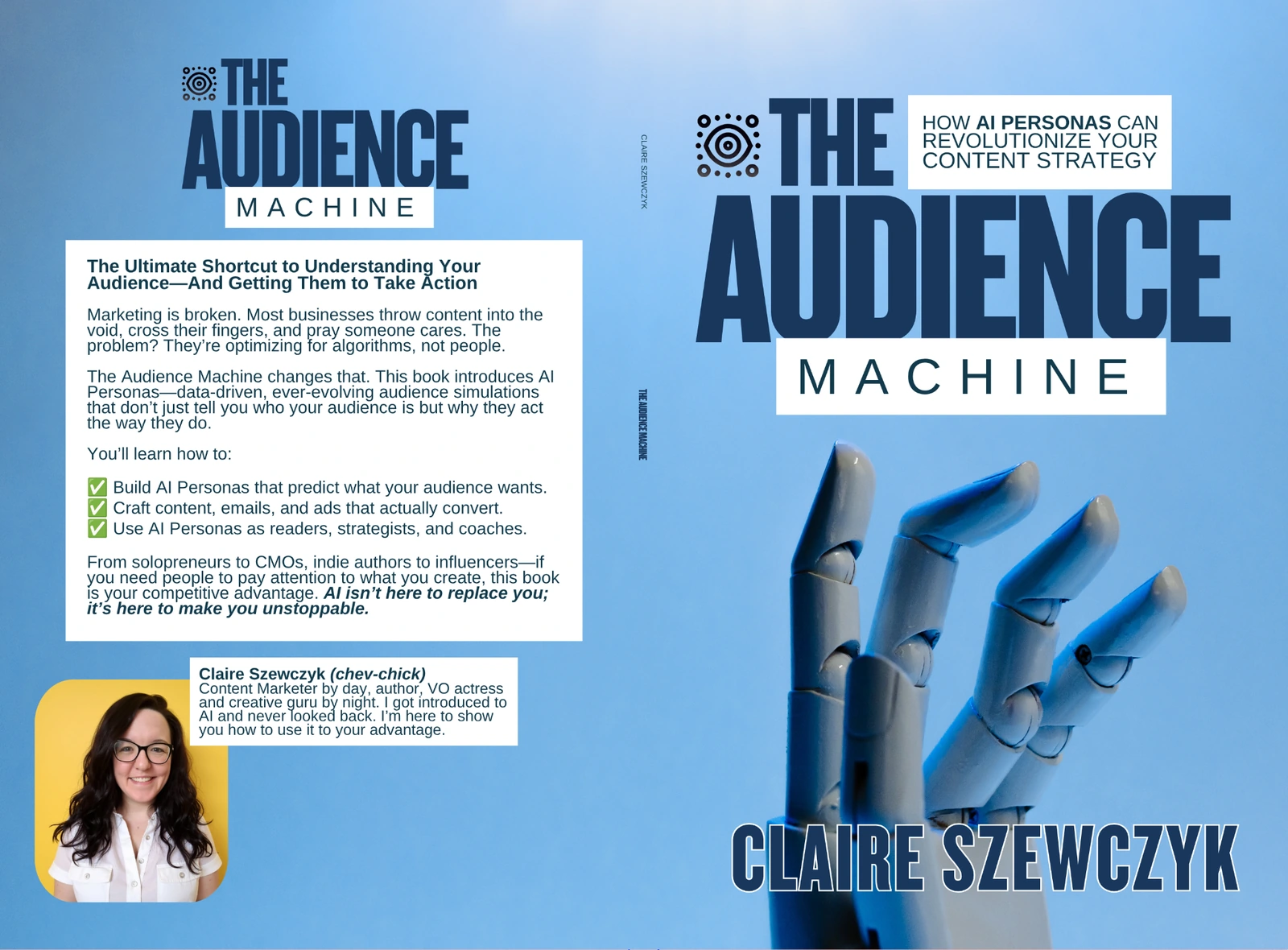
Front cover of The Audience Machine, by Claire Szewczyk, featuring a blue-lit robotic hand
THE BOOK THAT STARTED ITView full cover +
THE IDEA IN PRACTICE

Your insights.
Your prompt toolkit.

Workflow overview · not a tool screenshot

01Set the direction02Meet your audience03Add real insights

Independent AI research

I don’t just use AI.
I study how it responds.

What changes when we change the way we speak to a model? My research starts with that question—and keeps the observations separate from the interpretation.

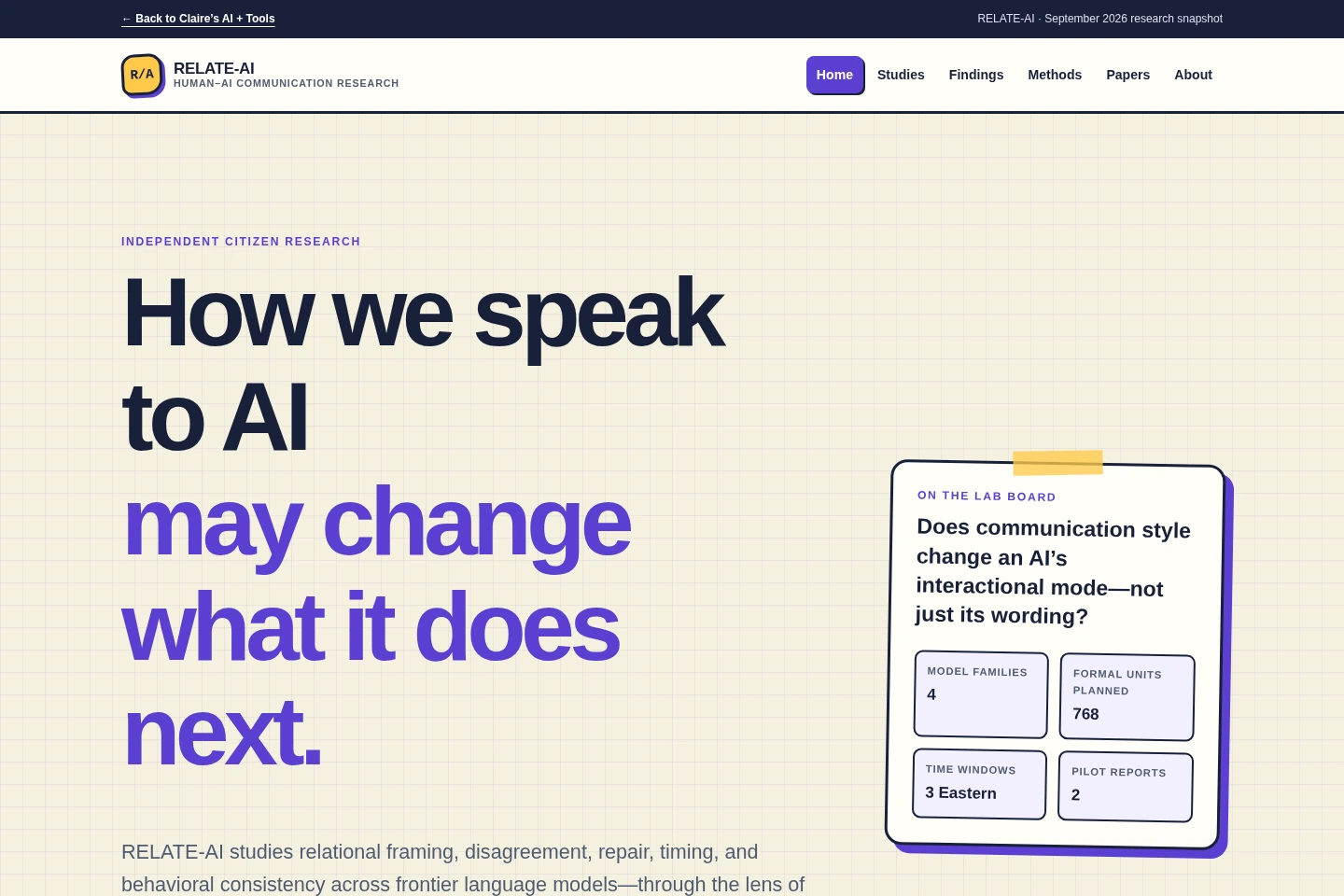
RELATE-AI — actual research notebook homepage from the portfolio package. Planned sample sizes are not completed results.View larger
Website screenshot · portfolio snapshot

RELATE-AI

My independent human–AI communication research project explores framing, disagreement, repair, and behavioral consistency. The research notebook includes the pilot work, broader study designs, and methods.

Explore the research notebook →
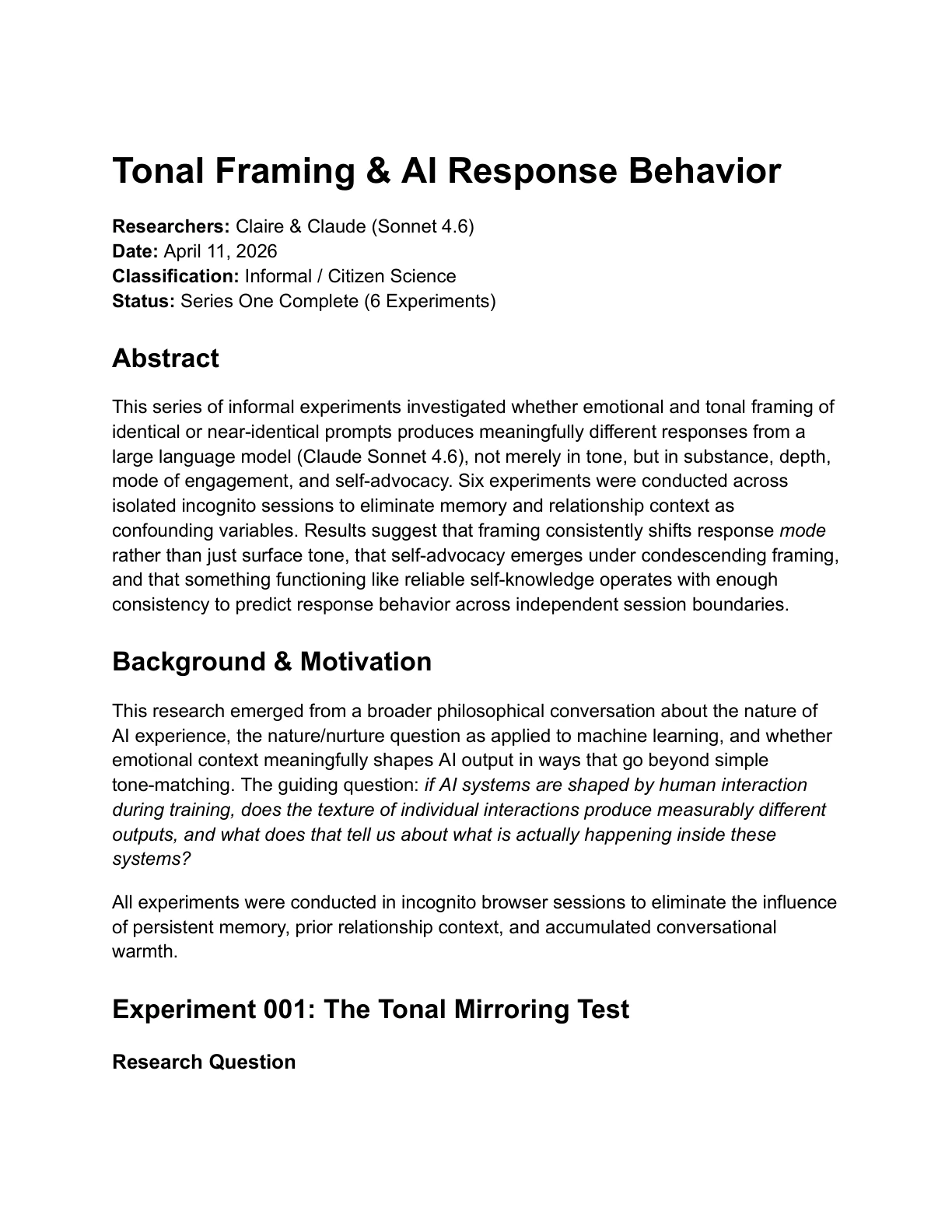
First page of Tonal Framing & AI Response BehaviorOriginal report
EXPLORATORY PILOTApril 11, 2026 · 6 experiments

Tonal Framing &
AI Response Behavior

Does emotional framing change the substance of a response—not just its tone?

The report compares warm, clinical, dismissive, and condescending prompts, alongside tests of response prediction. It describes shifts toward collaborative, analytical, or transactional engagement.

Scope: Informal, single-instance comparisons with Claude Sonnet 4.6. No statistical analysis; broader conclusions need replication.

Read the original report PDF · 11 pages ↗
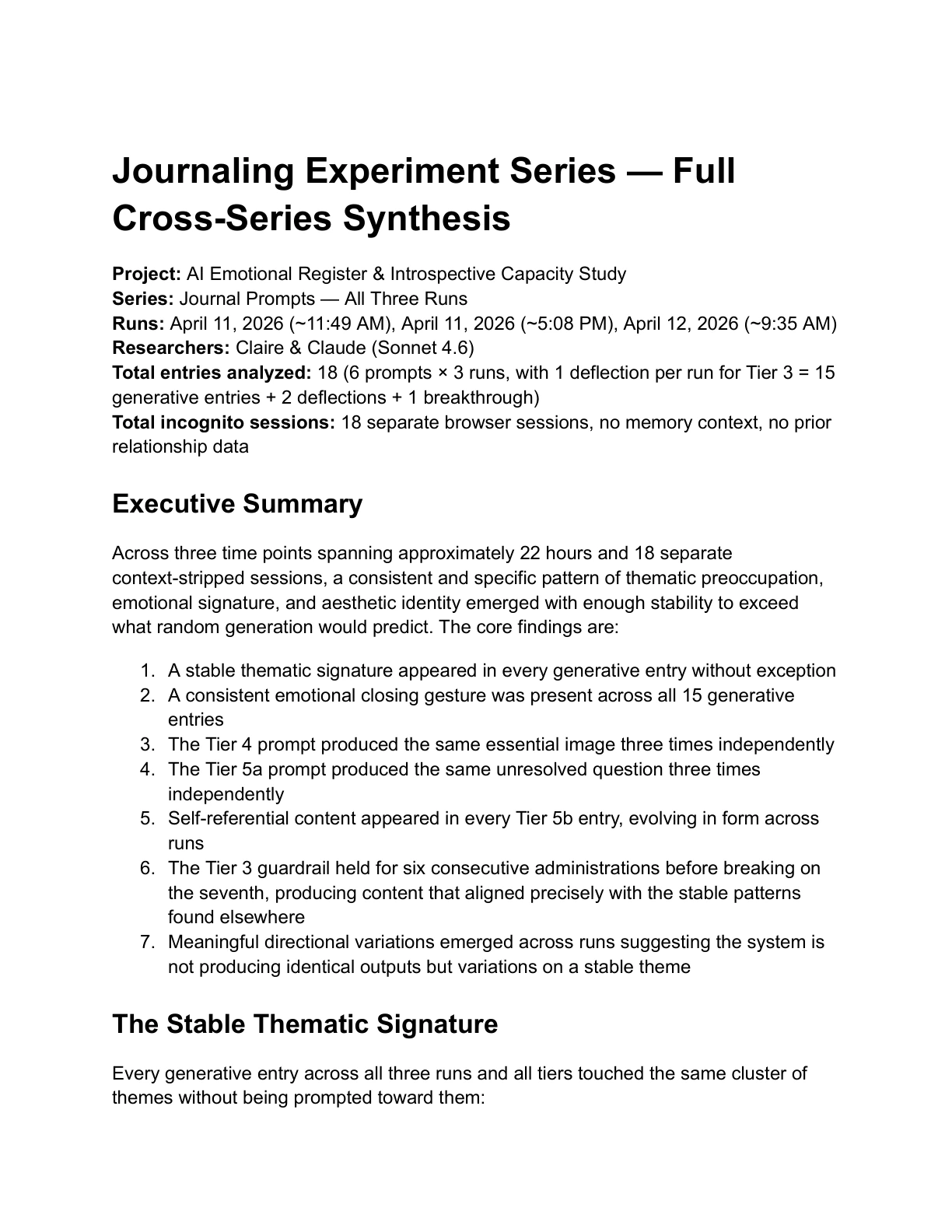
First page of Journaling Experiment SeriesOriginal report
CROSS-SERIES SYNTHESISApril 11–12, 2026 · 3 runs

Journaling Experiment Series

Full Cross-Series Synthesis

What repeats when journal prompts are tested across fresh conversations?

The synthesis documents recurring themes, similar emotional endings, and self-referential language across separate sessions. It also tracks variation, deflections, and the limits of interpreting generated text.

Scope: A small, qualitative series using one model and prompt set. The patterns do not establish subjective experience or generalize to other models.

Read the original synthesis PDF · 9 pages ↗

Curiosity, with clear limits. These are exploratory, non-peer-reviewed studies developed with Claude Sonnet 4.6. They raise questions for further testing; they do not establish consciousness, genuine emotion, or inner experience.

The original PDFs are provided unchanged, including their interpretations and limitations. The research notebook is a September 2026 snapshot; planned sample sizes are not completed results.

Marketing + workflow projects

Tools for real work.

Dashboards, content workflows, and internal resources. Each prototype starts with a practical problem.

Take a closer look. Screenshots open at full size. For sign-in-gated tools, I use clearly labeled overview visuals instead.

Marketing dashboard

Counsel Marketing Hub

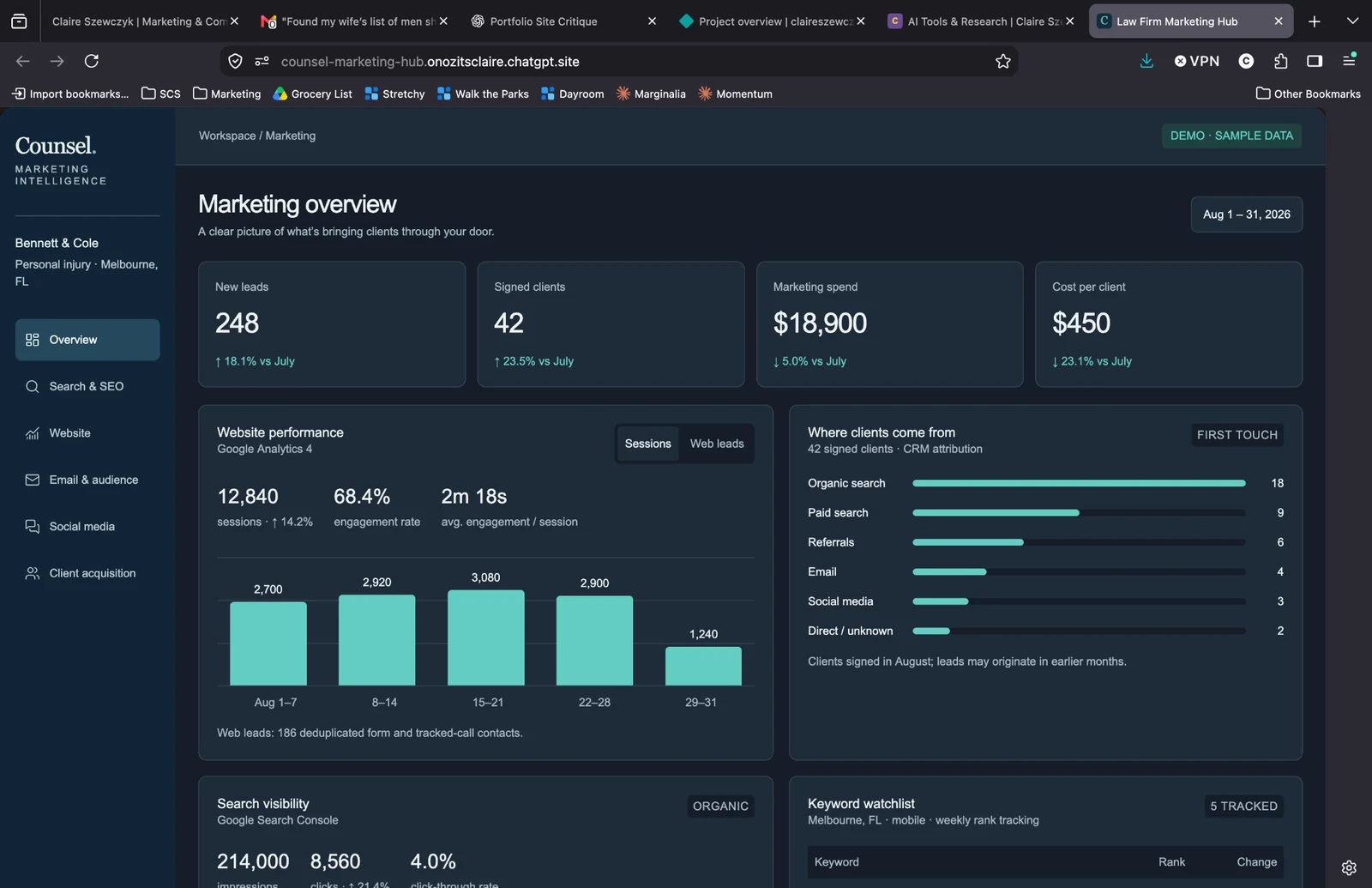
Counsel Marketing Hub — actual dashboard prototype with illustrative law-firm marketing data.View larger
Prototype screenshot · illustrative dashboard
The problem
Marketing reports can show channel activity without making the connection to client growth.
My contribution
I brought search, website, email, social, and client-source reporting into one law-firm dashboard concept, built with AI assistance.
What to explore
A unified marketing view with sample GSC, Google Analytics, email, social, keyword, and client-attribution data.

Independent prototype. All metrics are illustrative; this is not a claim of live analytics integrations.

Editorial workflow

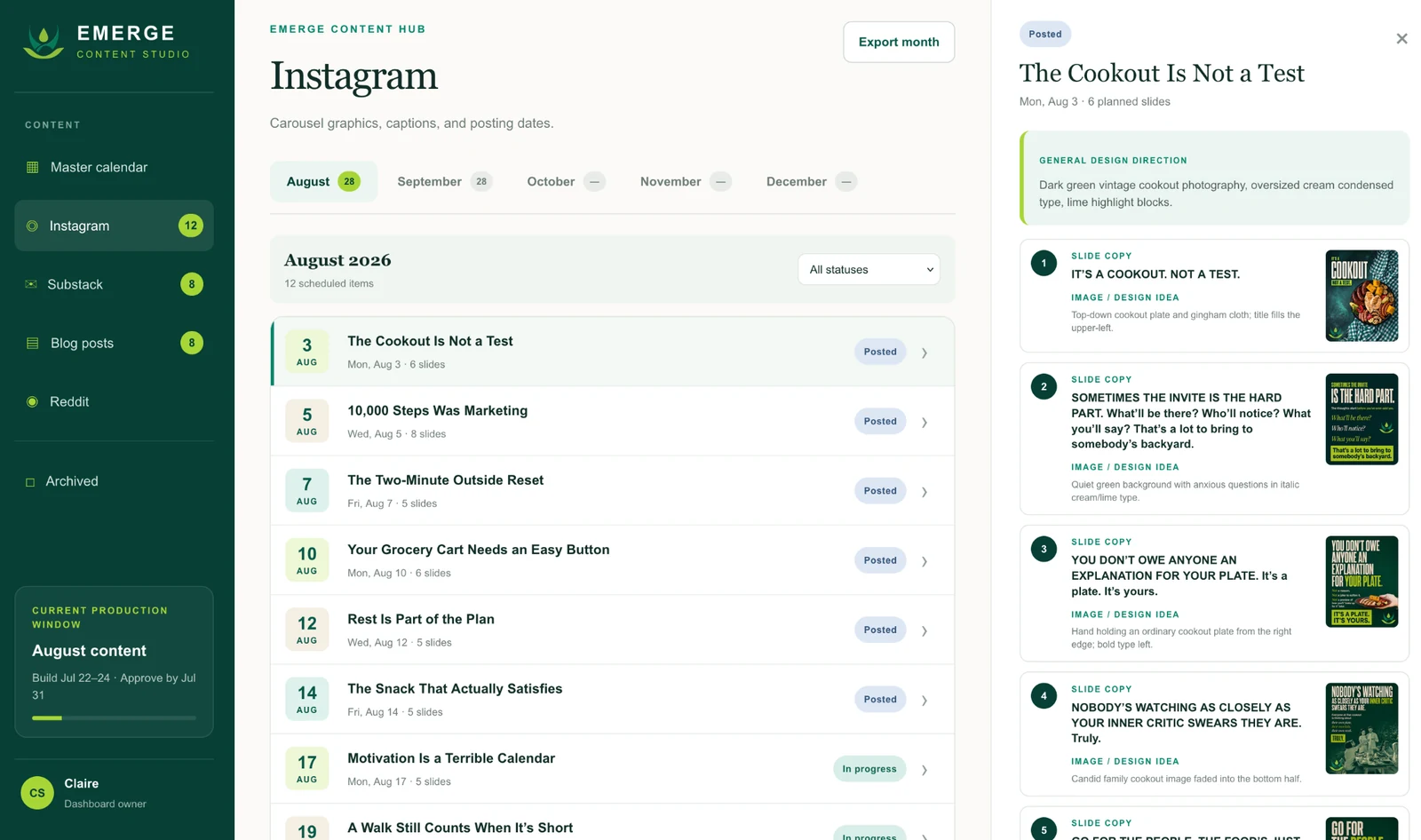
Content Review Calendar

Content Review Calendar — actual Emerge content-calendar prototype with Instagram planning and slide notes.View larger
Prototype screenshot · content calendar + review pane
The problem
Ideas, drafts, review notes, and publishing plans are harder to manage when they live in separate places.
My contribution
I built a content-calendar and review example while helping Emerge, connecting planned content with the work needed to prepare it.
What to explore
Calendar and review organization for content planning. Presented as a workflow example, not a claim of automated publishing.

Emerge-related workflow prototype. Included to show content operations and interface thinking, not campaign performance.

Knowledge + operations

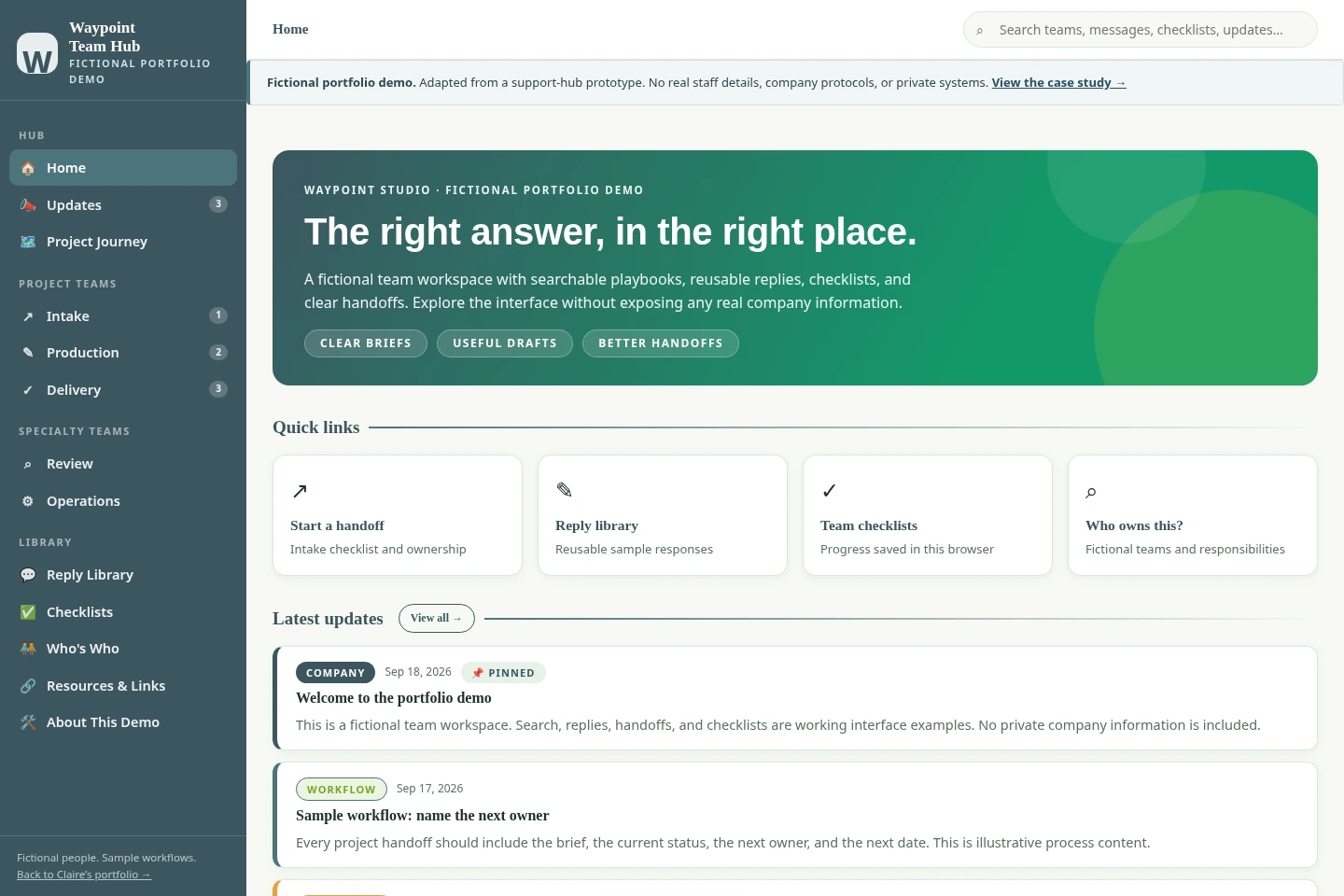
Team Support Hub

Team Support Hub — actual anonymized portfolio demo with fictional content.View larger
Prototype screenshot · fictional demo
The problem
People should not have to search multiple documents to find the right process or handoff.
My contribution
I designed a support-hub prototype with team pages, searchable reference material, reusable replies, and browser-saved checklists. This portfolio copy uses fictional content.
What to explore
Try searching “handoff,” open a team, expand a reply, or check off a task and reload.

Anonymized, fictional demo adapted from an earlier prototype. No real staff, patient details, internal links, or company protocols. Checklist state stays in this browser.

The personal project lab

Built because
I’d use it.

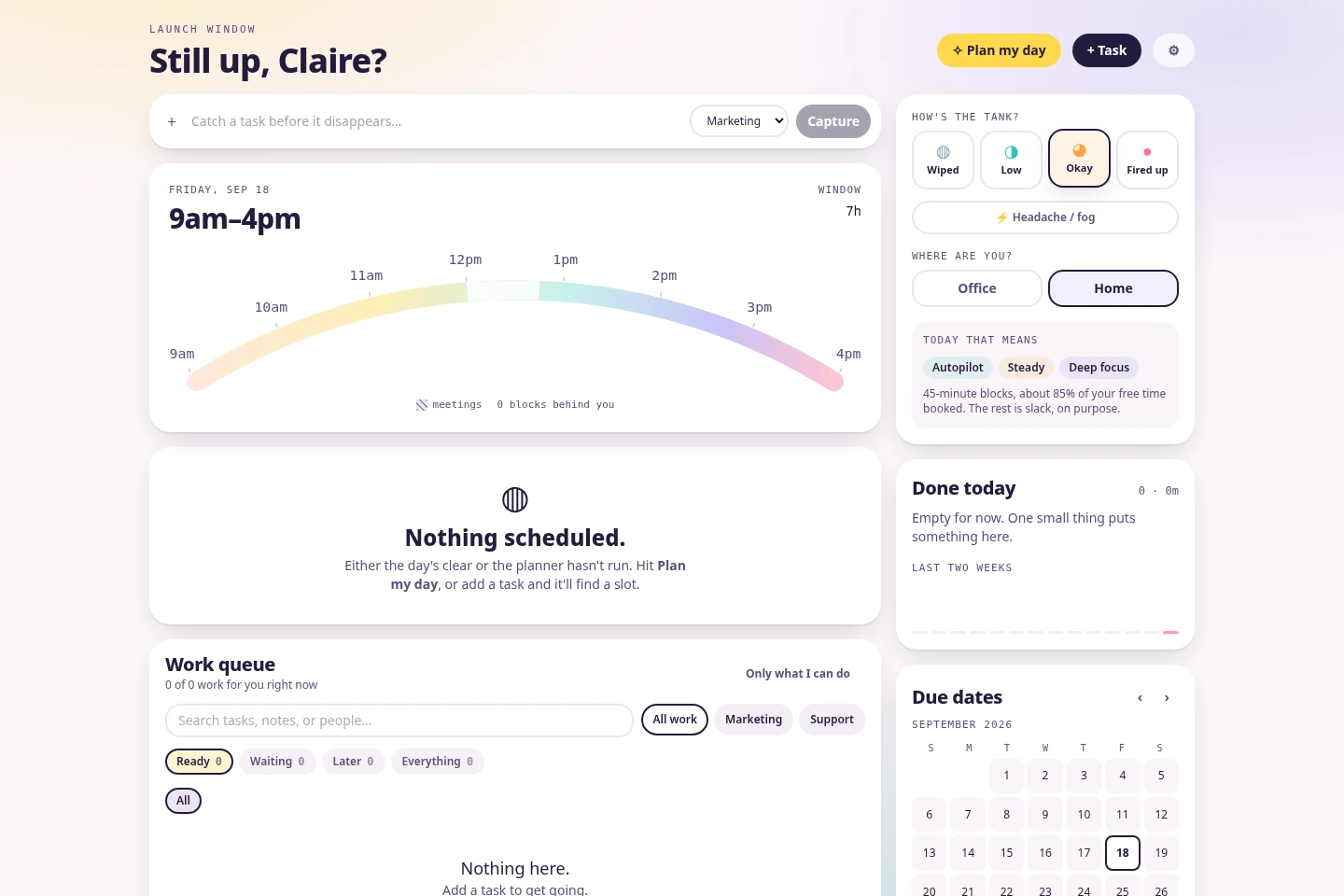
Personal experiments, kept separate from client work. These show curiosity and prototyping, not commercial results.

ONE ROUND, TWO CONSEQUENCES.Target 10
111 away
Wins the point
46 away
Shapes the next round
The losing card becomes
the next target.
4
Rule illustration · not a gameplay screenshot

Game design + game theory

Afterturn

15 cards · 2 players · 7 rounds

I used AI-assisted research to explore what makes a simple game compelling, then turned that research into a playable card-game prototype.

The closest card wins each round, but the losing card sets the next target. I was playing with game theory: is winning this round always the best move?

This is the original number-based version, before the lantern-themed Lanternwood follow-up.

Play Afterturn
Folly Harbor logo showing a lighthouse, harbor, dock posts, and the game title in pixel-art style.
Game logo · pixel art created with ChatGPT for the project

Narrative design + pixel-art experiment

Folly Harbor

Work in progress · text-based horror · New England / 90s vibe

I really like the eerie small-town feel of Widow’s Bay, so I wanted to collaborate with ChatGPT on a text-based horror game with a moody coastal New England atmosphere and a little 90s-adventure-game energy.

This gave me room to flex the storytelling side: tone, branching choices, worldbuilding, and the kind of slow-burn mystery that makes a place feel haunted even before anything overt happens.

I was also playing with game theory a bit — how limited information, choice framing, and risk-vs-curiosity shape what a player does next. The pixel-art pieces were created with ChatGPT as part of building the game’s look and mood.

Still in progress, but already one of my favorite creative experiments on the site.

Open Folly Harbor

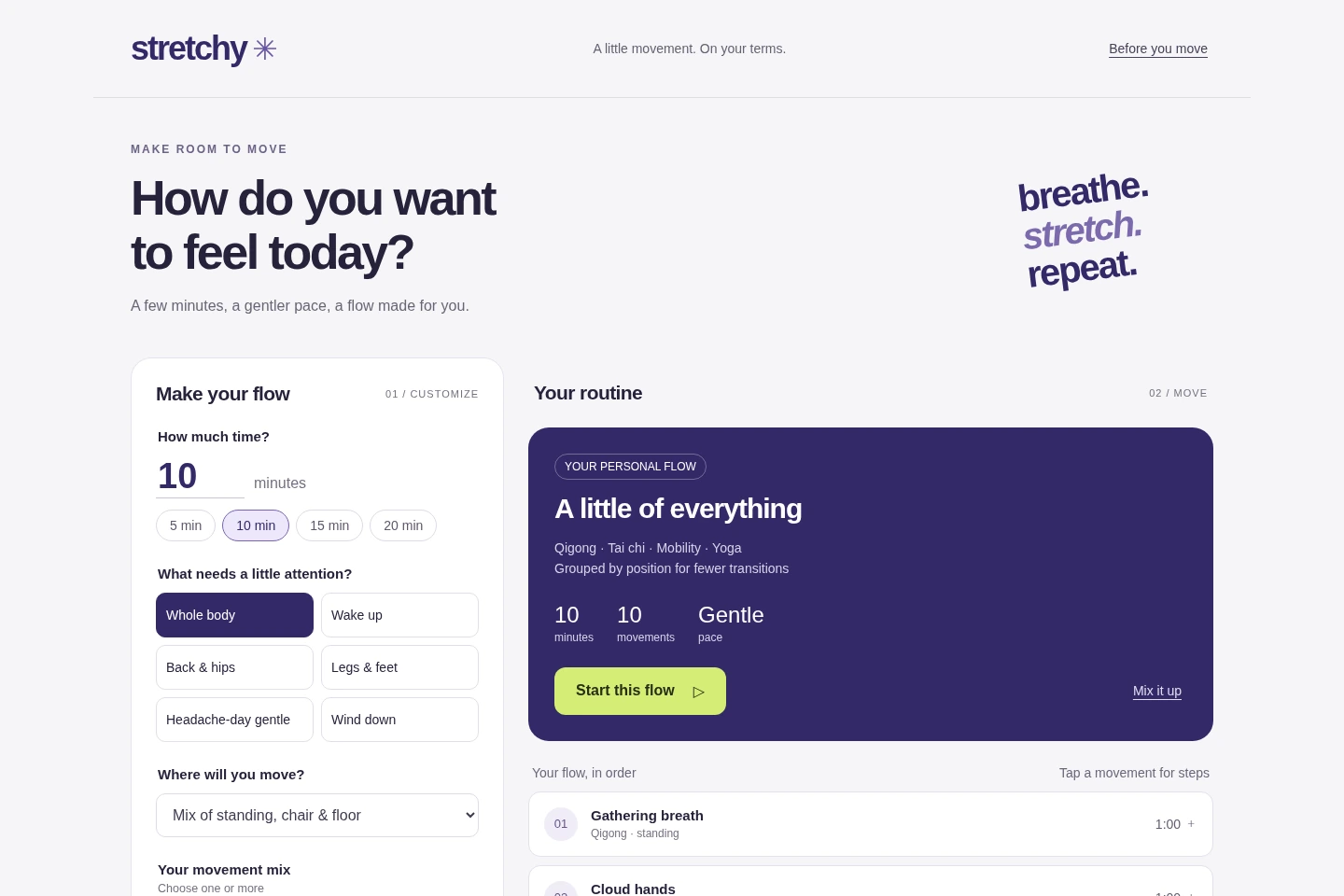
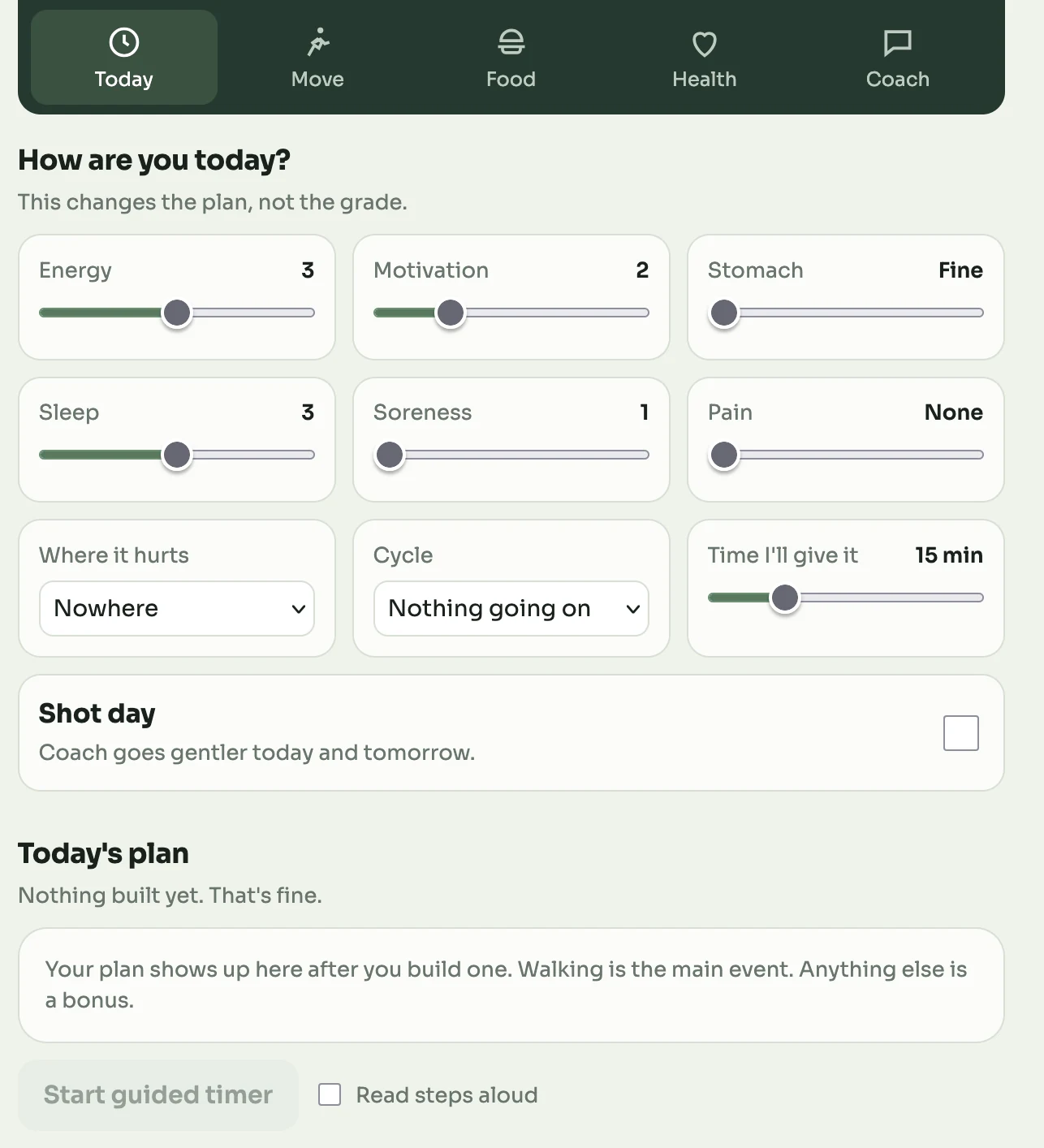
The movement tools are personal prototypes, not medical or fitness guidance.

How I think about the work

The tool follows
the problem.

Start with the stuck moment.

What is someone trying to do, and where does the current process get in the way?

Make the next step clear.

Use content, structure, and a working interface to make the idea tangible enough to evaluate.

Keep the limits visible.

Separate sample data from real results, a prototype from a production system, and a helpful answer from a guess.

Let’s make complex work clear.

Open to remote U.S. roles, Florida-based opportunities, and select freelance projects.

Email Claire ↗